Spinal Deformity Correction
Realigning the spine, restoring balance, and relieving chronic pain through advanced surgical care.
What You're Feeling
Chronic back pain, uneven posture, shoulder height differences...
How We Fix It
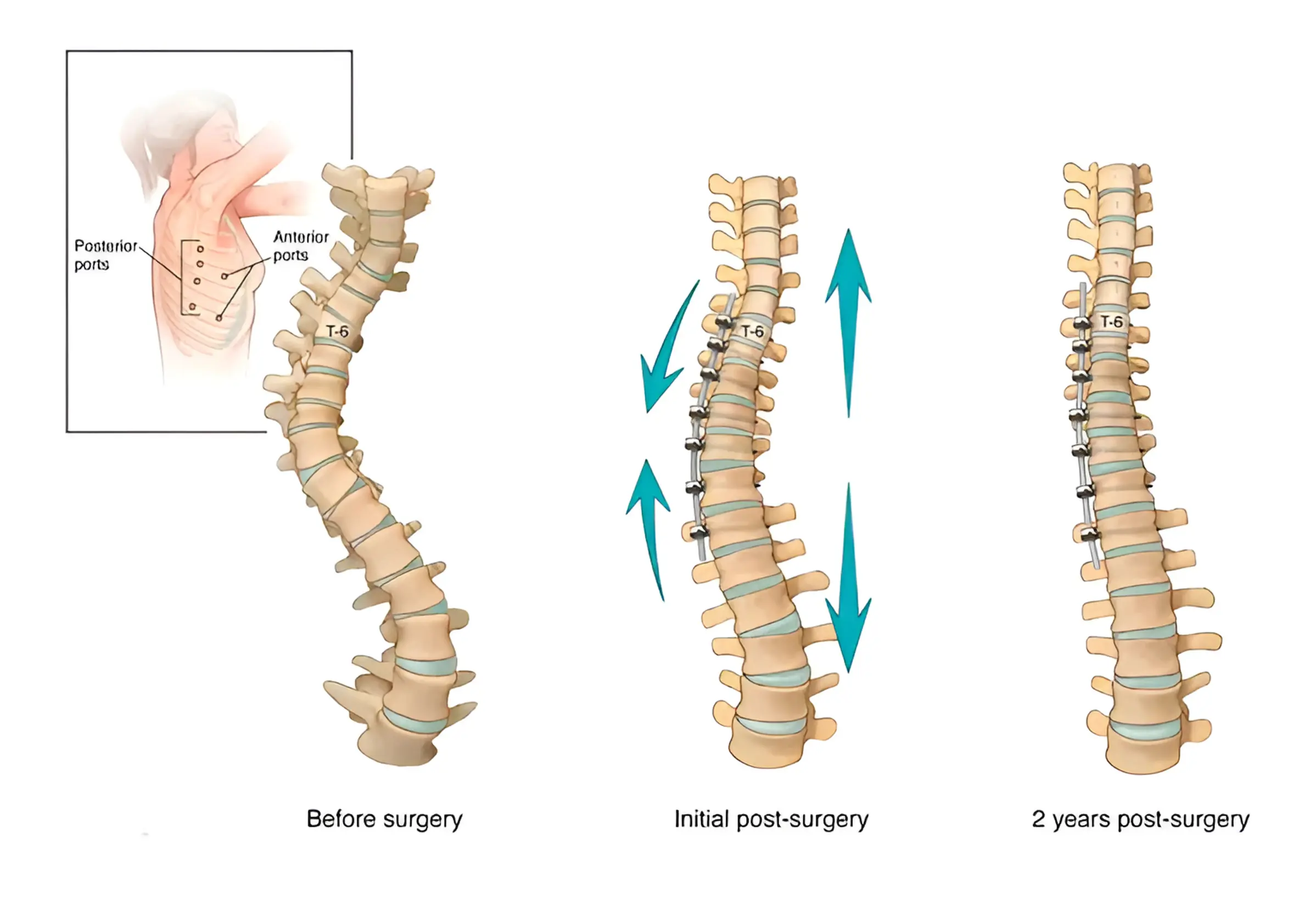
Through advanced spinal correction surgery, we carefully realign...
Our Treatment Approach
Spinal correction isn’t a one-size-fits-all fix...
- • In-depth diagnostics using X-rays...
- • Clear breakdowns of your spinal curve...
- • Surgical plans that prioritize...
- • Post-op rehab...
- • Regular follow-ups...
- • Support for your emotional...
What You Can Expect
Real results. Real relief. This isn’t just about straighter spines...
- • Better posture and balance
- • Reduced pain and stiffness
- • Greater confidence...
- • Improved lung and organ function...
- • Less fatigue and more energy...
- • Renewed independence...
- • Backed by a team that’s with you...
Conditions We Treat
Scoliosis
A sideways curve of the spine that can worsen with age or growth. Our team offers both surgical and non-surgical treatments—including spinal fusion and minimally invasive correction—to restore alignment and function.
Kyphosis
Excessive forward rounding of the back that can cause a hunched posture and back pain. Surgical correction helps straighten the spine and reduce pain, especially in severe or progressive cases.
Lordosis (Swayback)
An exaggerated inward curve of the lower back that can cause discomfort and postural issues. Corrective surgery can restore balance and reduce strain on spinal joints.
Flatback Syndrome
Loss of the natural lumbar curve leads to difficulty standing upright and chronic fatigue. Surgical realignment helps restore proper curvature and improve quality of life.
Neuromuscular Scoliosis
Spinal curvature caused by muscular or neurological conditions like cerebral palsy or muscular dystrophy. Our approach includes customized surgical planning and multidisciplinary care.
Congenital Spine Deformities
Spinal abnormalities present from birth can lead to severe curvature as a child grows. We offer early interventions and corrective procedures to support healthy spinal development.
Why Patients Trust Us
Dr. Jagdish Singh Charan brings over 15 years of experience...
FAQs
What is spinal deformity correction surgery?
It's a surgical procedure to realign and stabilize the spine when it's abnormally curved, such as in scoliosis, kyphosis, or other structural issues. The goal is to improve posture, relieve pain, and prevent future complications.
When is surgery necessary for spinal deformities?
Surgery is usually considered when the curve is severe, progressive, or causing pain, breathing issues, or mobility problems—and when bracing or therapy is no longer effective.
How long is the recovery after spinal deformity correction?
Most patients stay in the hospital for 3–7 days and begin walking within a few days. Full recovery—including a return to normal activities—typically takes 3–6 months with physical therapy.
Will I be able to walk after the surgery?
Yes. In most cases, patients begin walking within a day or two after surgery with help from our care team. We’ll guide your rehab step by step.
Are there risks involved?
Like any surgery, there are risks—such as infection, bleeding, or nerve injury—but in the hands of experienced surgeons, spinal deformity correction is generally very safe and highly effective.
Can adults have spinal deformity correction too?
Absolutely. While many cases are treated during adolescence, adults with worsening curves, pain, or posture issues can benefit greatly from surgery. Every case is evaluated individually.
Will I need rods or implants in my spine?
Yes, most correction procedures involve metal rods, screws, or plates to support and hold your spine in the correct position while it heals and fuses properly.